Towards the Silent Heart

kitchen table philosophy


2 Comments

An Easter reflection

by Joseph Raffa

It’s almost Easter, the time Christians celebrate the crucifixion and the resurrection of Christ. About 2,000 years ago Christ stormed through Judea and Galilee and, in a few short years, stirred up such ferment in the way he conducted his missionary life that his name and deeds have become etched in the historical movement of mankind’s consciousness. So much so, that even today, he is revered by millions throughout the world.

All this from a small beginning in a barren (mostly), desert backyard of a place that no-one would care about if it hadn’t come to be important to the Western world and to the Jewish and Arab people who live there. It was then, of somewhat strategic importance and conquering armies from East and West took turns laying claim to the area.

Somehow, because of this man and those who zealously spread his message, where he was born, where he died on the cross, his burial place and the extent of his ministry have become the focus of fervent adulation by devout Christians. How is it that one man could initiate such a hurricane religious change across the world?

The old Gods were swept aside to be replaced by the concept of One God. Idolatry was replaced with the worship of a God of light and love – a Being without form or shape – something to be contacted in hallowed moments of prayerful contemplation. Living rightly according to God’s laws was enthusiastically encouraged and this man who proclaimed a new way of living settled in the hearts of millions and became their inspiration.

In a way he is with us still. Religious days are celebrated by the faithful, each according to tradition. There are churches scattered the world over with a distinguishing cross somewhere on or in the buildings. Libraries contain sections with books on his life and from time to time, controversy surfaces in the media on some aspect of his life. Who was he? What was his purpose? Were the miracles for real?

Interpretations abound as the human reason stretches every which way to understand those momentous events and the tremendous  growth of the churches that followed in his name. A most unusual performance and one that confounds the rational mind. Perhaps this man did have a divine backup as he claimed. After all, a divine nature is something the rational mind can’t get its inquisitive nose into.

What a combination that would be – the divine and the human, dwelling in loving harmony. What kind of a harvest would that produce on this brawling, bruising, mixed up planet? Would it herald the end of violence and selfishness, of the divisions that mankind has raised? Would starvation be quickly dealt with and all the other kinds of actions that degrade what should be the fair and gentle face of mankind?

I suppose Christ had the answer to that and he considered it so important that he refused to compromise his standing when his time came. So, he faced the torture, the crucifixion, the taunts and all else the misunderstanding ones subjected him to. And he came up trumps. He did what he had to do – did it in style, perhaps with a sense of showmanship. It was, after all, an ingenious idea, the resurrection. It guaranteed an historical immortality.

After all these years, his light still shines down to us. When in need, knock and in some way, he’ll be there. Doesn’t matter who you are, what your life has been. If the need is deep and the asking sincere, the response will come.

What moved him then, what inspired him to go to the cross – is with us now. It’s closer than we know, waiting for us to return. This kind of love knows no boundaries. And should the divine enfold you, just for a moment, you will have joined that hallowed nature that Christ spoke about when he said “I and my Father are One.”

Note: Joseph wrote these words in 1994. They are as relevant today as they were then.

CrosscoverA complete collection of Joseph’s moving pieces about Jesus is available. Beyond the Cross, The Christ Collection is being offered at a discount price in the lead up to Easter. http://www.amazon.com/Beyond-Cross-Joseph-Raffa-ebook/dp/B00C8SN63K


Seasons of living

eng_253by Joseph Raffa

Our lives are a ritual of prearranged patterns. Every morning it begins anew. We rise, wash and go through our routines. Blinds are raised, windows are opened to let in fresh air. We dress according to taste – light and colourful for the summer, warm clothing for the winter.

Every season has its chores but overall, some things do not change. Breakfast, dinner, tea, washing up and shopping. Reading the daily paper if that is your preference. Monday to Friday has its own tempo. Work for many, except for the unemployed, the retired – whose time is their own – and the children.  Some are cradled in their mothers’ arms or pushed about in prams and strollers. Those old enough head for school on foot, bike, bus or car. The seasons dictate their own patterns in dress, food, entertainment and behaviour.

Sometimes the ritual is broken by sickness, accident, or an unexpected change. But whatever it is that disrupts the orderly flow of our lives, once it’s over, we return back to the patterns we are comfortable with if we can. Being human, we love the complex patterns of our lives. And we like guidelines to direct our travel.

We have our web of relationships – our home, which is the centre of our living and our refuge – family connections and a host of gadgets to make life comfortable. And that’s the way it goes, a mixture of happy and sad, until death drags us away. Rituals then, don’t mean a thing any more.


1 Comment

Trapped on life’s treadmill

ID-100203331

Image courtesy of Naypong / FreeDigitalPhotos.net

by Joseph Raffa

Why is it that we are not left to enjoy our lives in peace? We are continually urged to do this or that, to work harder, produce more, spend, save or invest. And of course, at election time we are told to be very careful – to consider the issues intelligently, so that we vote for the right party and thereby go on to prosperity and economic wellbeing.

Inwardly, the pressures we impose on ourselves are just as demanding. We pattern out our lives in programmes and routines that must be done, regardless of how we feel, and we subject ourselves to stern disciplinary actions so that our intentions are fulfilled, come what may.

All the time we are harried from within and without. We are urged to drive ourselves constantly onwards, either by self-imposed directives or by outside authorities, eager to shape our lives for our eventual benefit. As a consequence, our lives are carved up – a slice for this, a slice for that, with a piece going here and there till there is very little left that we can call our own.

Is it any wonder then, that we throw ourselves into whatever pleasures or amusements surround us at the moment, to grasp a little of those experiences we can hold for ourselves alone? Something that we can give ourselves to, without hindrance or restraint, without any strong demand or urgent need arising to drag us away. At these times, we can function at a natural level, regardless of whether the moments indulged in are truly beneficial or not. Just so long as we express this deep-felt need to be ourselves as we want to be, if only momentarily.

For we feel the restrictions and demands of modern living so deeply. With the incessant ‘this must be done, then that’, on and on, endlessly till it seems that our lives are carved up into many little pieces, just to feed the voracious appetites of the dragons of modern social living and personal intention.


Who will save our Earth?

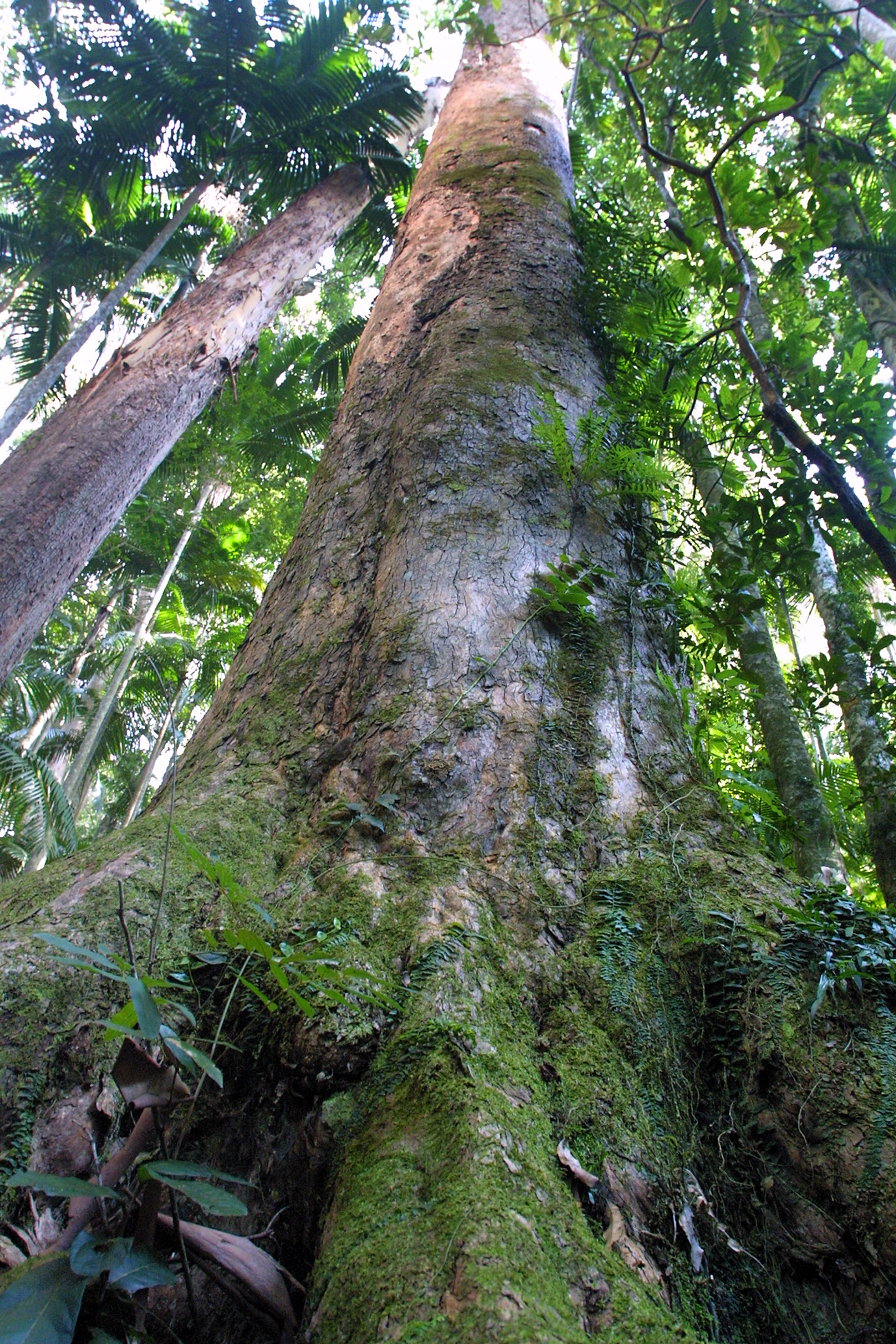
IMG_0229Please save this earth.  It is our home – all of it.  From the icy Arctic to the snows of the Antarctic, through the temperate zones and the equatorial tropical areas. Today, the earth lies shattered, bruised and broken by a relentless human attack that shows little sign of easing. Everywhere, destruction of natural areas, of the rain forests continues as the demand for economic expansion accelerates regardless of the consequences to the health of the planet.

Where are the champions who will step forth to defend the planet; who will stand on the rostrum of public attention and demand a halt to this rapacious advance? Have our feelings for our mother earth faded completely, pushed aside by the urgent need for economic expansion?  Don’t we bleed as the forests go – do we feel no pain as species of wild life vanish?

Where are the sensitive people who love this Earth, who will cry out enough, who will demand that we take far more care of what is left, who will live differently so that they consume less and do not demand more and more? Who ask, not for a constantly increasing and affluent lifestyle, but who will settle for less because they love this Earth and the natural beauty they find here; and now, no longer can they bear the pain of this despoliation for the sake of an increasing production that doubtfully adds very much more of real value to the human expression.

And not for fear do they ask for an easing of economic expansion, not only because of pollution or the threat of destruction to the ozone layer and what this may bring, but because they love, really love, from the very depths of their being, this beautiful planet they live on. And they want it to go on being a delightful place to be on, for themselves and for those who come after.

Joseph Raffa


1 Comment

What Kind of Love?

Baby2_edited-1People speak of love as the solution to the problems and difficulties that come our way. But, to say “I love you”, is that enough? You may care as much as you will for children, friends, even feel for the human race but this does not bring an end to the troubles that keep on coming.

We need more than to be loved. We need to be able to understand our actions. To be loved does not guarantee this. I speak here of what humans understand as love, in the way they love their children, or as husbands and wives love one another.

I do not speak here of that other kind of love – of what is called God’s love for mankind. This does indeed bring enlightened action and a deeper understanding of our actions, our motives and thinking processes. By this love we do see deep into our minds, into the very heart of what we are. Ordinary human love, no matter how well intentioned, cannot compare with this, neither in quality nor in its power to bring about change.

Both are necessary. Ordinary human love is enough to provide shelter, food, clothing, education, affection. This is the kind we know. It gives a measure of guidance to growing children, security and a feeling of well-being.The other overlaps this and extends beyond it.  There is a light that glows in the darkness of our living, that will not permit the brooding problems of the mind to overwhelm it. Human love as we know it cannot do this – cannot take us through life without being torn about inwardly, without being prey to anxieties.

Extend our arms as often as we will – offer ourselves, our help, our time, search for the words that may soften a blow – none of this can match the touch of Universal Love. The emptiness we feel inside, the loneliness, the disarray we reflect, the single-minded pursuit of what draws us regardless of consequences to our minds or health – this does not yield to words or good intentions.

When minds are enclosed, locked in a personal prison of desire and intention, the key to freedom lies not in the hands of the mind. We can acknowledge the desire to be free – urge to cast aside the restraints we feel, rail against the dark, prison walls that surround us – but if a greater love does not come our way, bringing the light of a fresh understanding, we will languish in time, in the restrictions of the mind. And we will not even understand why we are in trouble, why we suffer as we do nor why we are harried from all sides.

Joseph Raffa

For a list of Joseph’s books and links to where to buy them visit Joseph’s Bookshelf.